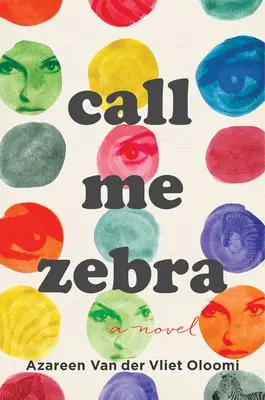
Summary
Bibi Abbas Abbas Hosseini is the last of a proud family line of self described "Autodidacts, Anarchists, Atheists." Her family fled Iran during the war with Iraq; her mother died on the way, and the journey, with its hunger and exhaustion, never left her. Barcelona was the family's last stop before the United States, and her father died years later in New York. Now alone in New York, she renames herself Zebra, "an animal that rejects all binaries," and sets out to retrace the route of her exile in reverse, a "Grand Tour of Exile" through the Old World, with a gift of cash from a rogue Marxist professor at NYU.
She goes to Barcelona, then Girona, then the village of Albanyà in the Catalan countryside, meaning to write a grand work about literature and loss. In Barcelona she meets Ludo Bembo, a dapper Italian philologist who both repels and fascinates her, and their tempestuous affair forces her to face how she uses literature both to hold the world away and to reach it. Along the road she argues with Borges, Cervantes and Kathy Acker, and when she is sad the storm clouds literally gather. By the end she has not mapped the void she set out to map, but she has begun to learn that love, like suffering, lasts.
This is a demanding, deliberately excessive book, less interested in plot than in its narrator's mind, and Zebra is by turns brilliant, pompous and exhausting. Kirkus warned that she is "at times, deliberately annoying" and still called the novel "a brilliant, demented, and bizarro book that demands and rewards all the attention a reader might dare to give it." Irina Dumitrescu, in the Los Angeles Review of Books, found that "the story occasionally drags, as Zebra keeps traveling while never seeming to reach her goal." Nathan Scott McNamara, in the same journal, wrote that "Zebra is the smartest narrator you will encounter this year." It suits readers who love books about books.
Historical Context & Significance
Call Me Zebra won the 2019 PEN/Faulkner Award for Fiction, announced on April 29, 2019. The judges, Percival Everett, Ernesto Quiñonez and Joy Williams, considered more than 400 books from more than 180 publishers, and wrote that the novel "is a library within a library," adding that "in today's visual Netflix world, Ms. Van der Vliet Oloomi's novel performs at the highest of levels in accomplishing only what the written novel can show us." The finalists were Blanche McCrary Boyd's Tomb of the Unknown Racist, Richard Powers's The Overstory, which had won the Pulitzer Prize for Fiction two weeks earlier, Ivelisse Rodriguez's Love War Stories and Willy Vlautin's Don't Skip Out on Me.
Houghton Mifflin Harcourt published the novel on February 6, 2018, and it was longlisted for the PEN Open Book Award. Van der Vliet Oloomi, born in Los Angeles in 1983 and raised in Iran, the United Arab Emirates and Spain, had won a Whiting Award and a National Book Foundation 5 Under 35 honor for her first novel, Fra Keeler (2012). She teaches at the University of Notre Dame, and her third novel, Savage Tongues, followed in 2021.
Where to get it
We may earn a commission if you buy through these links, at no extra cost to you.
Opens WorldCat, a catalogue of library holdings run by the nonprofit OCLC. We do not ask for or receive your location.