Summary
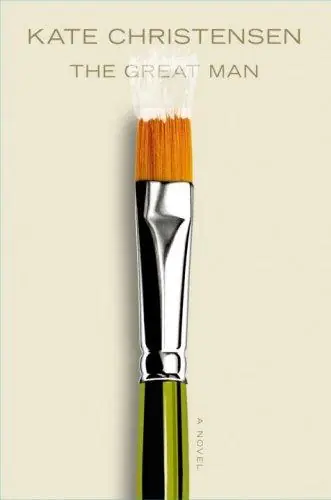
The Great Man is Kate Christensen's fourth novel, published by Doubleday in August 2007. Its title belongs to Oscar Feldman, a New York painter with enormous appetites and an ego to match, who worked in the years when abstraction ruled and painted only figurative nudes, always of women. He has been dead five years, at seventy eight, when two biographers start digging: Henry Burke, an anxious new father, and Ralph Washington, a gay Black intellectual, who hold competing contracts to write his life. The novel is really about the three women they come to interview.
Abigail, Oscar's wealthy and devout Jewish wife on the Upper West Side, put up with his philandering and raised their severely autistic son, Ethan, without his help; she had a passionate three year affair of her own with Ethan's doctor, and she is not above bribing Ralph to soften the worst of Oscar's record. Teddy, his mistress of decades in Brooklyn, bore him twin daughters and asked for nothing, and she prefers Henry as a biographer. Maxine, Oscar's sister, is an abstract painter with a reputation of her own, still working in SoHo at seventy nine and resentful of the attention her brother gets, yet it is she who tries and fails to keep hidden the secret behind one of his most admired paintings. Along the way the women cook for the biographers and for each other, bicker, and find common ground they never had while Oscar was alive.
Christensen wrote it in the third person as a deliberate challenge after more than a year of writer's block, and later compared the method to "wrestling with a big, greasy, mean, cheating bear." The result is warm and funny and frank about the sex lives of women in their seventies; Publishers Weekly found the characters "fully alive and frankly sexual creatures," and Kirkus called them "tough old birds." Kirkus also judged the plot "flimsy," and it is: this is a book for readers who enjoy talk, food and character more than events, and it asks what a family, a marriage and a reputation are worth once the man at the center is gone.
Historical Context & Significance
The Great Man won the PEN/Faulkner Award for Fiction in 2008, chosen from almost 350 novels and story collections by the judges Richard Bausch, Molly Giles and Victor LaValle, who had been a finalist himself in 2003. Christensen received $15,000, and each finalist $5,000: Annie Dillard for The Maytrees, David Leavitt for The Indian Clerk, T. M. McNally for The Gateway: Stories and Ron Rash for Chemistry and Other Stories.
The prize came after years of indifferent luck. Christensen wrote that her first novel, In the Drink, was filed as chick lit, that Jeremy Thrane came out a couple of weeks before September 11 and vanished, and that she had expected The Great Man to be torn apart by reviewers. "I've always identified with underdogs and losers and malcontents," she wrote after winning, and she added that "it sure is nice to win a prize." She followed it with the novel Trouble and later added food writing to her novels, with the memoirs Blue Plate Special (2013) and How to Cook a Moose (2015), which won the 2016 Maine Literary Award for memoir.
Where to get it
We may earn a commission if you buy through these links, at no extra cost to you.
Opens WorldCat, a catalogue of library holdings run by the nonprofit OCLC. We do not ask for or receive your location.