Summary
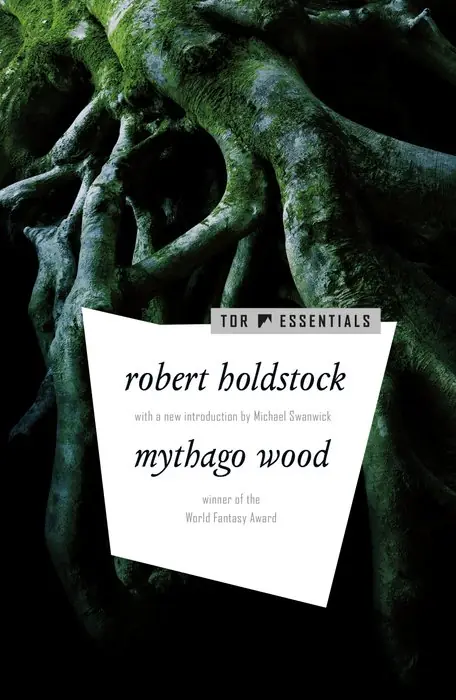
Steven Huxley comes home from the Second World War in 1946 to Oak Lodge, his family's house on the edge of Ryhope Wood in Herefordshire. The wood covers barely three square miles and has stood undisturbed since the last Ice Age, and it is far bigger on the inside than it is from the road. Steven's father, George, an unloving and preoccupied man, has recently died after spending his life on the wood, and Steven's elder brother, Christian, has taken up the obsession. The father's journals describe mythagos: figures of myth and legend that the wood makes real out of the human unconscious. Among them are Guiwenneth, a red haired warrior woman out of legend, and the Urscumug, a monstrous primal figure.
Steven tells the story himself, and at first he does not believe a word of it. Then the mythagos start to appear. Christian disappears into the wood and comes back older and violent, and he carries off Guiwenneth, whom Steven has come to love, leaving his brother for dead. Steven reads his father's papers, recruits Harry Keeton, a burn scarred former RAF pilot, and goes in after them, deeper into the wood, where time and distance stop behaving. The ending plays out the story of Cain and Abel in the heart of the forest. Steven knocks Christian into a fire, Guiwenneth dies of her wounds in his arms, and Steven settles near her father's tomb to wait for her return.
The opening chapters are slow and quiet, a family story before they become a quest, and the book grows stranger and more dreamlike the further in it goes. Kirkus called Holdstock's central idea "one of the most exciting and arresting in years," though it found the ending sank into flat symbolism; the Speculiction blog, by contrast, found the book building to "an exciting and unpredictable conclusion." This is a novel for readers who like myth taken seriously and landscape as a character, and who are content to follow a story that grows less literal as it goes.
Historical Context & Significance
Mythago Wood shared the World Fantasy Award for Best Novel in 1985 with Barry Hughart's Bridge of Birds; the other finalists were Archer's Goon, The Ceremonies and The Talisman. It began as a novella in The Magazine of Fantasy and Science Fiction in September 1981, which won the British Science Fiction Association's short fiction award and was a World Fantasy finalist for best novella. Gollancz published the full novel in 1984 and Arbor House brought it to the United States in 1985. It also won the BSFA Award for Best Novel of 1984, against a shortlist that included William Gibson's Neuromancer, J. G. Ballard's Empire of the Sun and Angela Carter's Nights at the Circus.
Holdstock, born in Hythe, Kent, in 1948, trained in medical zoology before writing full time. He returned to Ryhope Wood again and again: Lavondyss (1988) won him another BSFA Award, and the sequence ran through The Hollowing and Gate of Ivory, Gate of Horn to Avilion in 2009. He died in November 2009, aged 61, after an E. coli infection.
Where to get it
We may earn a commission if you buy through these links, at no extra cost to you.
Opens WorldCat, a catalogue of library holdings run by the nonprofit OCLC. We do not ask for or receive your location.