Summary
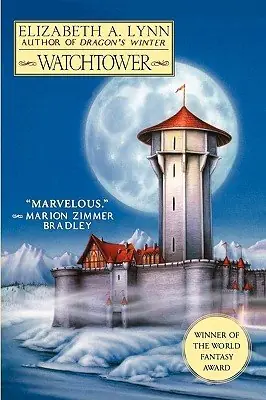
Watchtower is set in the northern country of Arun, and it begins with a conquest. The mercenary Col Istor takes Tornor Keep and kills its lord, Athor. Ryke, the keep's watch commander, bargains for the life of Athor's son, Errel, by agreeing to serve Col in the same post, and Col keeps Errel alive as his fool, to humiliate him. Col also takes Ryke's sister, Becke, as the keep's woman. Ryke keeps up a secret line to Errel and to the loyalists in the village and waits.
The chance comes with two messengers from Cloud Keep, Norres and Sorren. They help Ryke and Errel escape and lead them to Vanima, a valley of endless summer where there are no ranks and no soldiers, and where people share the work and live in a way Ryke has never seen. On the way Ryke learns that both messengers are women, and that Sorren is Athor's daughter, who ran away with Norres because the north would not let them love each other. When Col breaks a truce and kills the lord of Cloud Keep, Errel goes back north with his new allies, disguised as traveling entertainers, and retakes the keeps. Errel kills Col; Becke has been killed by the men of another lord, Sironen. Sorren becomes lord of Tornor, Errel returns to Vanima, and Ryke comes to understand that what he feels for Errel is love.
Lynn writes in short declarative sentences, full of closely observed physical detail, with a spare, choppy rhythm that some readers love and others find cold. The opening chapters in the occupied keep are slow and claustrophobic, and the book opens up once the escape begins. It rewards readers interested in how fantasy treated women's lives and love between men and between women, written at a time when the genre rarely showed either.
Historical Context & Significance
Watchtower won the World Fantasy Award for Best Novel in 1980. Berkley Putnam had published it in 1979 as the first of the Chronicles of Tornor. The finalists it beat included its own sequel, The Dancers of Arun, along with Patricia Wrightson's The Dark Bright Water, Patricia A. McKillip's Harpist in the Wind, Charles L. Grant's The Last Call of Mourning and Chelsea Quinn Yarbro's The Palace. Lynn won a second World Fantasy Award the same year, sharing the short story prize for "The Woman Who Loved the Moon."
The Tornor books were among the first fantasy novels to treat gay relationships as an ordinary part of their world, and to depict love between men and between women openly and sympathetically. Watchtower was named to the retrospective list of the James Tiptree Jr. Award in 1996. The Northern Girl, set a century after The Dancers of Arun, completed the sequence in 1980. Lynn was also a finalist for the John W. Campbell Award for best new writer in 1978 and 1979.
Where to get it
We may earn a commission if you buy through these links, at no extra cost to you.
Opens WorldCat, a catalogue of library holdings run by the nonprofit OCLC. We do not ask for or receive your location.