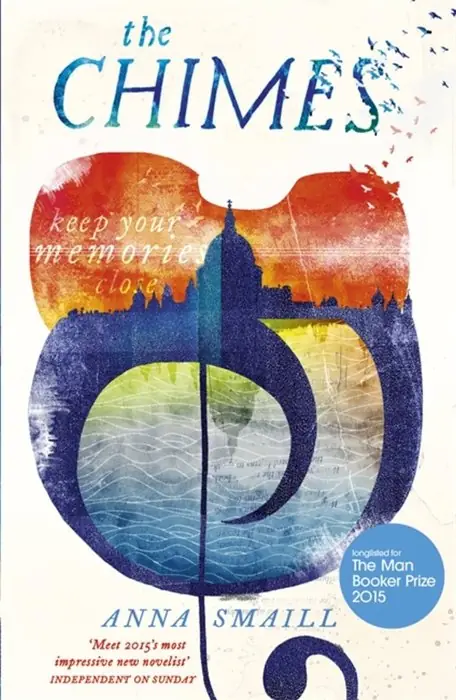
Summary
The Chimes is set in a London that survived the Allbreaking, a catastrophe in which sound itself became a weapon. Now the Order, which rules from Oxford, plays music across the country from a vast instrument called the Carillon, and the Chimes leave people unable to keep their memories: each day's experience fades by the next. Writing, which the Order calls "code," is forbidden. People carry objectmemories, small keepsakes that help them hold on to who they are, and the Chimes, which stop all work at matins and vespers, replay Onestory, the version of history the Order wants everyone to accept.
Simon Wythern, an orphaned farm boy, comes to London with almost nothing: a name, Netty, and a scrap of melody. He falls in with Five Rover, a pact of scavengers led by Lucien, who work the river mud and the tunnels under the city for palladium, the precious metal they call the Lady. Lucien pushes Simon to remember, and what he recovers is dangerous: his parents belonged to Ravensguild, a resistance that kept memory and writing alive. The two of them set out through Reading toward Oxford to destroy the Carillon, and the book ends with the old Order toppled and an uncertain future beginning.
Smaill trained as a violinist, and she writes like one. Tempo markings such as presto, lento and tacet do the work of adverbs, and invented compounds like memorylost and objectmemories build Simon's world from the inside. The first half, which lets the reader learn this forgetful world as slowly as Simon does, is the richest part; the second becomes a quest and a coming of age romance and moves quickly toward a familiar end. Kirkus called the book "entrancingly poetic and engagingly plotted." Nina Allan, in Strange Horizons, admired the writing but warned that it "ends more or less word for word as you might expect." It suits readers of dystopian fiction who care as much about sound as about story.
Historical Context & Significance
The Chimes won the 2016 World Fantasy Award for Best Novel, presented at Columbus, Ohio, against a strong field: Kazuo Ishiguro's The Buried Giant, N. K. Jemisin's The Fifth Season, which had won the Hugo that summer, Paul Tremblay's A Head Full of Ghosts, K. J. Parker's Savages and Naomi Novik's Uprooted, that year's Nebula winner. Sceptre had published it in London in 2015 as Smaill's first novel, and it was longlisted for the 2015 Man Booker Prize, the year Marlon James won with A Brief History of Seven Killings. Mobius published it in the United States in May 2016.
Smaill was born in Auckland in 1979 and studied musical performance at the University of Canterbury before turning to writing. Her first book was a collection of poems, The Violinist in Spring, in 2006, and she later completed a doctorate at University College London on contemporary American poetry. Her second novel, Bird Life, followed in 2023.
Where to get it
We may earn a commission if you buy through these links, at no extra cost to you.
Opens WorldCat, a catalogue of library holdings run by the nonprofit OCLC. We do not ask for or receive your location.