Summary
It is 1988 in Mexico City, and Luisa is seventeen, a precocious reader of Baudelaire who lives with her parents, both academics, in Colonia Roma and feels friendless at an elite international school where her classmates have bodyguards waiting outside the gates. She finds her people among the outsiders who listen to Joy Division and the Cure, and she fixes on Tomás Román, a sullen dropout dressed all in black, whom she first sees as "a snag in the composition" of her life. When she reads in the newspaper that a troupe of Ukrainian dwarfs has escaped from a Soviet circus touring Mexico, she and Tomás meet at the bus depot and head for Zipolite, a small town on the Oaxacan coast known as the Beach of the Dead, to look for them.
Chloe Aridjis moves back and forth between the beach and the months before the flight, and the runaways do not reach the coast until halfway through the book. In Zipolite, among nudists, beachcombers and hippies, Luisa's feelings for Tomás flicker out; he goes his own way, and she attaches herself instead to an older man whose angular face looks Slavic to her and whom she calls the Merman, until he turns out to be a boatman named Gustavo. The dwarfs are never found. Her father's search for her runs alongside her own drifting, and near the end he turns up to ask her why she left.
This is a mood piece rather than a plot, and readers should know that going in. Luisa's head is full of shipwrecks, the Antikythera mechanism, Lautréamont and New Wave records, and the sentences are dense and ornate; Ellen Jones in the Los Angeles Review of Books called it "a contemplative, meandering novel" with "no great climactic resolution." Kirkus found the style baroque and the book "shallow," while Publishers Weekly praised a "strange and hypnotic novel." At 224 pages it is short, and it suits readers who read for atmosphere, for a vividly remembered Mexico City, and for the long, idle days of being seventeen; anyone who needs a story to go somewhere will find it slow.
Historical Context & Significance
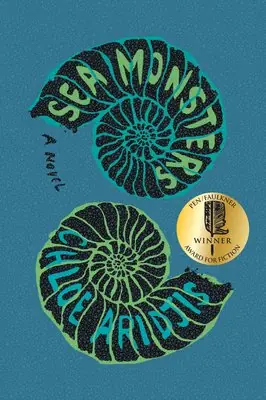
Sea Monsters won the 2020 PEN/Faulkner Award for Fiction, announced on April 6, 2020, weeks into the pandemic. The judges, Patricia Engel, Ru Freeman and Porochista Khakpour, read more than 400 books and had pressed that year for the prize's first longlist. They called the novel "a book unlike any other; a true standout and a gift for these times in which we are all craving escape." The other finalists were Yiyun Li's Where Reasons End, Peter Rock's The Night Swimmers, Maurice Carlos Ruffin's We Cast a Shadow and Ocean Vuong's On Earth We're Briefly Gorgeous. The spring celebration became a tribute video released on May 4.
Aridjis told the foundation she had been carrying the story "for 30 years, ever since living it." Born in New York City in 1971, the daughter of the Mexican poet Homero Aridjis, she grew up in Mexico City and the Netherlands, where her father was a Mexican diplomat, took a doctorate at Oxford and lives in London. Her fourth novel, The Shadow of the Object, was longlisted for the 2026 Booker Prize.
Where to get it
We may earn a commission if you buy through these links, at no extra cost to you.
Opens WorldCat, a catalogue of library holdings run by the nonprofit OCLC. We do not ask for or receive your location.