Summary
Billy Behan is fifteen, poor, and fatherless in the Bronx of 1935 when he juggles for a beer truck inspection and catches the eye of the gangster Dutch Schultz. He talks his way into Schultz's offices, is taken on by the accountant Otto Berman, and renames himself after a local street so that an Irish boy can pass in a Jewish mob. The book opens with what he sees next: Schultz's lieutenant Bo Weinberg, suspected of dealing with the Italians, taken out on a boat and dropped into the sea with his feet set in a tub of cement. Schultz keeps Weinberg's girlfriend, Drew Preston, a rich socialite with a closeted husband named Harvey, and when the gang decamps to upstate Onondaga for Schultz's tax trial, Drew and Billy pose as governess and ward and begin an affair. There is a stay in Saratoga in August, a gathering threat from prosecutor Thomas E. Dewey and the rival mafia, and then Billy learns Schultz means to kill Drew before she can testify. He spends Berman's allowance on flowers and gifts that keep her too visible to murder, and Harvey takes her out of the country.
Doctorow gives the ending fully. Mafia gunmen shoot Schultz, Berman, and the bodyguards in a Newark chophouse; Billy escapes through a bathroom window, the dying Berman gives him the safe combination, and Billy sits by Schultz's bed writing down the delirious monologue that holds the clue to his buried fortune. He convinces the mafia that only Schultz's lawyer Dixie Davis knows where the money is, goes home to his mother in the Bronx, and a year later Drew hands him their child to raise. He goes to college, fights in the war, and quietly digs up the money afterward.
It is one long first person monologue in unspooling sentences, and Doctorow called it a young man's sentimental education in the tribal life of gangsters. Kirkus said the book simply pulls and pulls and pulls, and that what could have been merely another round of nostalgia drenched mobster romancing earns a claim, by the end, to a genuine depth. Some readers found the last pages soft: Publishers Weekly said Doctorow falters only in a sentimental, almost fairytale ending, and Gary Soto in the Los Angeles Times found the last turn more than a little improbable. At 323 pages it moves fast, and it suits anyone who likes a crime novel with a boy's wonder in it and prose that takes the risk of eloquence.
Historical Context & Significance
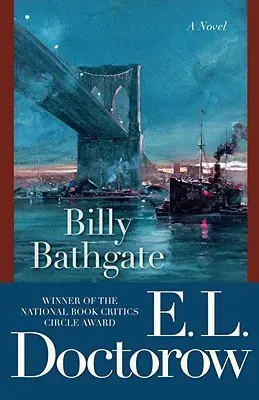
Billy Bathgate won the National Book Critics Circle Award for Fiction for 1989, presented the following year, over Amy Tan's The Joy Luck Club, Oscar Hijuelos's The Mambo Kings Play Songs of Love, Jane Smiley's Ordinary Love & Good Will, and John Casey's Spartina. It was Doctorow's second NBCC fiction award after Ragtime for 1975, and he would take a third for The March for 2005. The same season it was a finalist for the 1989 National Book Award, which went to Spartina, and for the 1990 Pulitzer Prize, which went to The Mambo Kings; it did win the 1990 PEN/Faulkner Award and the 1990 William Dean Howells Medal. Anne Tyler in the New York Times called it Doctorow's shapeliest piece of work, a richly detailed report of a fifteen year old boy's journey from childhood to adulthood.
Robert Benton's 1991 film, from a Tom Stoppard screenplay, cast Loren Dean as Billy, Dustin Hoffman as Schultz, and Nicole Kidman as Drew; it cost 48 million dollars, took 15.5 million, and drew largely poor notices, with a Golden Globe nomination for Kidman the consolation. The novel has outlasted the film.
Where to get it
We may earn a commission if you buy through these links, at no extra cost to you.
Opens WorldCat, a catalogue of library holdings run by the nonprofit OCLC. We do not ask for or receive your location.