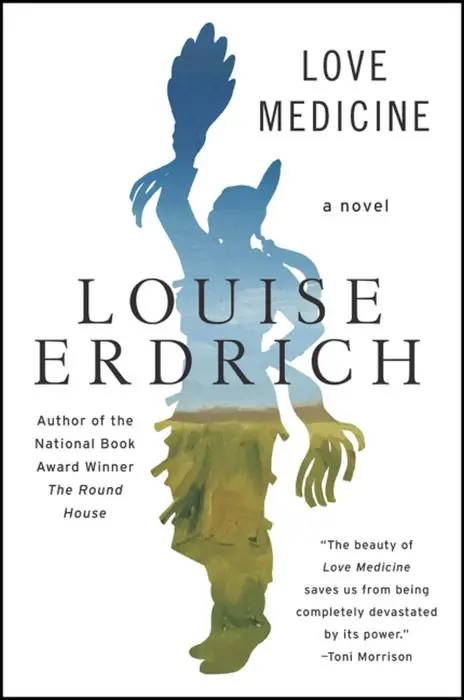
Summary
On the day before Easter Sunday 1981 June Kashpaw, a Chippewa woman, leaves a bar in North Dakota with an oil worker, escapes from him into the cold night, and sets out on foot toward the reservation. She freezes to death. Her niece Albertine learns of it from a letter a week later, and the novel that follows is the story of the two families she belonged to, the Kashpaws and the Lamartines, told across fifty years by many voices, some in the first person and some not, in chapters that circle and answer one another rather than run in a line.
The oldest thread begins in 1934, when young Marie Lazarre climbs the hill to the Sacred Heart convent hoping to be a saint and is scalded with boiling water, stabbed through the hand with a fork and knocked out with a poker by Sister Leopolda; coming down, she collides with Nector Kashpaw, who is selling geese, and he forgets the girl he had meant to marry, Lulu Nanapush. Nector marries Marie and, in 1952, falls into a five year affair with Lulu. He writes Marie a letter saying he is leaving her and Lulu a letter saying he is coming to her; the crumpled letter to Lulu catches fire and burns her house down, and he goes back to Marie. Decades on, Lipsha, the foundling Marie raised, tries a love medicine to bind old Nector back to Marie: he shoots at geese, which mate for life, and misses, buys frozen turkey hearts instead, and Nector chokes on one and dies. Drunk Gordie hits a deer with his car and sees June in its eyes. In the last chapters Lipsha learns that his mother was June and his father Gerry Nanapush, Lulu's son and an escaped prisoner; he wins the red Firebird that June's son King bought with her insurance money in a card game, drives Gerry to the Canadian border, and brings the car home.
Erdrich's narrators are oblique and the family trees take work; the reward is a reservation world with its saints, drunks, ghosts and jokes all at full strength. Best for readers who like a novel built from stories and are willing to keep notes.
Historical Context & Significance
Love Medicine won the National Book Critics Circle Award for Fiction for 1984, presented in early 1985, over David Leavitt's Family Dancing, Alison Lurie's Foreign Affairs, Jayne Anne Phillips's Machine Dreams and Harriet Doerr's Stones for Ibarra; Lurie's novel took the Pulitzer Prize that spring. It was Erdrich's first novel, published by Holt, Rinehart and Winston in 1984, and it also won the Sue Kaufman Prize for First Fiction and the Los Angeles Times Book Prize. The New York Times called it a notable, impressive book of first fiction, the unique evocation of a culture in severe social ruin, yet still aglow with the privilege and power of access to the spirit world.
The book was not finished when it won. Erdrich, who has called publication temporary storage rather than a final word, issued an expanded edition in 1993 with four new chapters and a revised Wild Geese; in 2009 she removed two of those chapters, Lyman's Luck and The Tomahawk Factory, because they interrupted the flow of the ending. The families returned in The Beet Queen, Tracks and The Bingo Palace. Erdrich won the NBCC fiction award a second time for LaRose (2016).
Where to get it
We may earn a commission if you buy through these links, at no extra cost to you.
Opens WorldCat, a catalogue of library holdings run by the nonprofit OCLC. We do not ask for or receive your location.