Summary
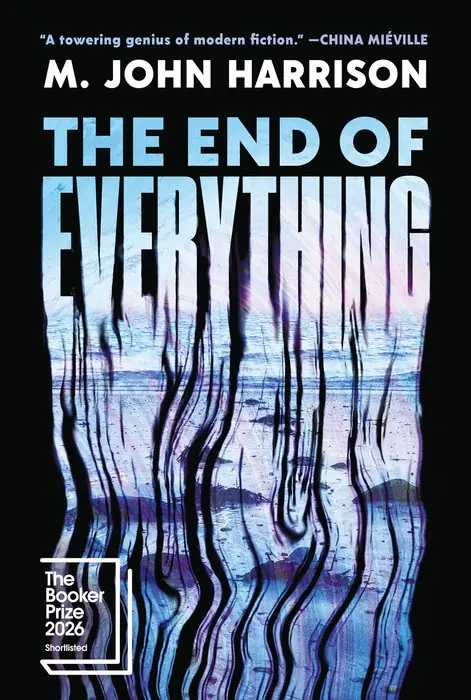
Phillip Tennent makes his living on the tideline of a town on the Kent coast, collecting the strange things that wash up out of the Channel and selling them on. It is the near future, years after a catastrophe nobody can quite describe. Alien beings called the iGhetti invaded Britain some time ago and a war nobody understands drags on; government barely functions, the sea is full of new creatures, and Europe has vanished into a mist that comes and goes, a whole continent somehow misplaced. The novel's other center is Phillip's elderly aunt Marnie, a painter who defends her terraced house against predators and vandals with a pragmatic callousness that can shock, and whose memory is beginning to fail. Their tender, unlikely bond is the heart of the novel.
Then Phillip fishes something out of the water that he cannot keep: an artifact dumped by the iGhetti that stares at him with a half formed face, grows back a severed hand and starts trying to talk. He wants to sell it. By the end it has learned to read, it is driving the car, and it has attached itself to Marnie as a kind of companion.
Reading Harrison is closer to dreaming than to following a plot, and this book never explains itself. The Booker judges said it could be read as a thriller, a mystery, a satire, a dystopia, a road novel or a work of realism, which is fair warning: if you need to know exactly what happened, you will not be told. What you get instead are exact, painterly sentences about light, weather and half emptied seaside towns, sudden shootings, and jokes in unexpected places. It is short, about two hundred pages, and Mary Beard, who chaired the judges, called it a gripping read. The Guardian's Michel Faber, a longtime admirer, cautioned that it would not be for everyone and found it bleaker and less funny than Harrison's previous novel. Readers who like Ballard or David Lynch, the touchstones the Spectator heard in it, will be at home.
Historical Context & Significance
The End of Everything won the 2026 Booker Prize, announced on Monday, November 9, 2026, at Old Billingsgate in London, where the previous year's winner, David Szalay, presented the trophy. At 81, M. John Harrison became the oldest winner in the prize's history, passing Margaret Atwood, who was 79 when she shared the 2019 award. Mary Beard said the judges spent a whole day debating the shortlist before agreeing unanimously, and she called the novel "the politics of now seen through the lens of the future." Beard chaired a panel of Raymond Antrobus, Jarvis Cocker, Rebecca Liu and Patricia Lockwood, which chose it over Marlon James's The Disappearers, Luke Kennard's Black Bag, Rebecca Perry's May We Feed the King, Elizabeth Strout's The Things We Never Say and Douglas Stuart's John of John. The prize is £50,000. Gaby Wood, who runs the Booker Prize Foundation, said Harrison was the first Booker winner "to have emerged from the bona fide SF world."
It was Harrison's first Booker nomination, four years after he sat on the 2022 jury himself, and the first Booker win for Serpent's Tail, the Profile Books imprint that published it in Britain on June 18, 2026; in the Observer, Helen Macdonald wrote that she did not think she would read a better book that year. Riverhead followed in the United States on October 13. His earlier prizes include the Arthur C. Clarke Award for Nova Swing and the Goldsmiths Prize for The Sunken Land Begins to Rise Again.
Where to get it
We may earn a commission if you buy through these links, at no extra cost to you.
Opens WorldCat, a catalog of library holdings run by the nonprofit OCLC. We do not ask for or receive your location.